
Showing posts with label #JustTheStart. Show all posts

Thursday, 26 September 2019

#FresherPressure - Living independently at university

We took to social media to see what practical tips students have for living independently for the first time as a fresher.

For many students, moving to university will be the first time they experience the freedom of living independently. However as they say with great freedom comes great responsibility! Even though your parents have probably been telling you this since you were little, experiencing it is something else, as cliche as it sounds. We asked students to tell us what important things they think freshers should know…

Manage your expectations

If you’re not used to doing lots of the small, everyday tasks yourself, give yourself time to adjust to a new way of living. Cooking, cleaning, shopping, and planning all take time out of your day but at some point you’ll relax into a new routine - and appreciate your parent’s spaghetti bolognese even more when you do visit home.


Nothing tears down apprehension as effectively as preparation - you can’t possibly know everything that’s going to happen. The best thing you can know, is that you know nothing about what is going to happen. It will all be a whirlwind, a chaos even sometimes, and the only thing you can do is be prepared for that.


Keep on top of finances

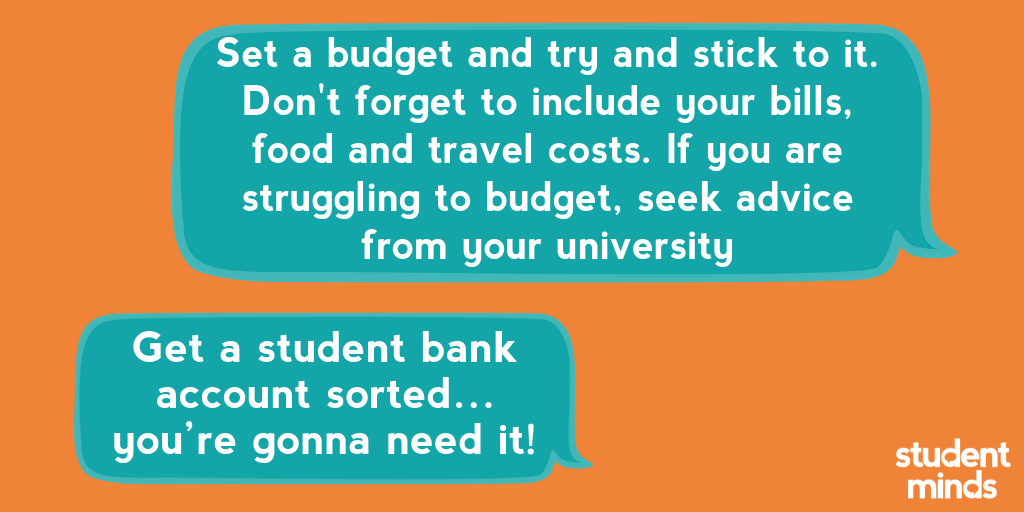
One of the biggest changes for many students is suddenly being in complete control of their money. No longer will you only have pocket money your parents give you every month, but actual huge amounts of money in your bank account. This can be overwhelming at first so it’s important to give this a bit of thought so that you don’t find your account is running low before the end of the year. Check out our tips here.

Look after yourself

It can be easy to forget the most basic tasks when you start trying to prioritise lots of things - this is your reminder that looking after yourself is super important! Get a candle, or a room smell, make time for yourself to just relax. When even washing becomes a hurdle and you put on old clothes as you´ve gotten lazy and sloppy, stop, and take care of yourself.


Getting involved in university activities and meeting new people can be a great way to make your day more fun.


Don’t be afraid to ask for help

Let’s face it, most of us don’t know everything before we’ve had time to experience it and make a few mistakes. Don’t be ashamed to ask a flatmate or support services for advice if you’re struggling with getting to grips with living alone. Check our support page for more info about where to go for help.

Don’t let the #FresherPressure of living independently get to you, follow the above advice or let us know your own tips on Twitter using #FresherPressure.

Saturday, 21 September 2019

#FresherPressure: Starting university with an existing mental health difficulty

We took to social media to see how students manage starting university with a pre-existing mental health difficulty.

Starting university is a scary experience for anyone; if you add mental health difficulties into the mix, the whole process can feel quite daunting. To be able to give you advice that has genuinely helped other people cope with this potentially challenging combination, we asked students for their tips on how they managed...

Prepare before you go

There’s a lot you can actually do to help yourself before you even get to university for the first time,  from gathering information to letting people know what you’ve been through. 

‘Definitely contact your university and get in touch with their support services. Perhaps a support plan can be put in place for you before you even arrive’ - Eli and ‘Have a printed sheet with emergency numbers so they’re easy to access’ - Suzanne

Have a look at what support is available on your campus and don’t forget to register for a local GP, you might be eligible for extra support - it is best to do this as soon as possible.

‘Look into DSA, you’re not alone’ - Grace and ‘Take advice and decide whether you are going to register with a GP local to uni or travel to your home GP. You can use any GP or walk-in centre if you need GP care in an emergency’ - Kate

Inform people

Once you arrive at university, it can be difficult to tell people about the challenges you’ve faced but if you can find a few people to trust, it can make your experience starting university a lot easier. As well as informing more formal services, having friends who are aware will help you to feel more supported.

‘It’s so hard to tell tutors but it’ll help them to understand why you might act a certain way’ - Lily and ‘Tell a flatmate, they don’t need your life story but having someone aware can help’ - Hayley

Know your worth

Although stigma around mental health difficulties has greatly reduced with the increase in awareness and openness in society, it can still be hard to feel confident in who you are when you are also facing these struggles. Remind yourself that your experiences are valid and you are just as rightfully at university as everyone else.

‘Nobody has the right to ever make you feel less due to mental ill health. You should feel so proud of the unique journey you are about to embark on at university’ - Michelle and ‘Never allow anyone at university put you down for difficulties you experience or make you feel that you are less capable, there is no shame in accessing support’

If you feel confident enough to proactively reach out for help, it can make your time at university a lot easier and more enjoyable. Make use of the services available to you - from practical allowances to being able to talk to someone face-to-face.

‘There's no shame if you need to delay exams/get extensions for mental health reasons - you'd be surprised how many others do’ - Steph and ‘It's such a relief having someone to offload to regularly, provide support and work towards goals with’ - Beth

Accept the possibility of challenges

It’s completely normal to find the transition to university difficult, no matter whether you have faced mental health difficulties before or not. Keep it in perspective; some of the things you’re struggling with may be very common amongst all your peers, such as adjusting to living independently and a harder academic level, but be aware when these challenges become prolonged and start to impact negatively on other areas of your life.

‘Remember it's okay to find things difficult - Rose and ‘Ask for help from other students’ - Paula and ‘All transitions can be a challenge’ - Martin

Be kind to yourself

While taking all the above (seemingly huge) steps, it can be all too easy to forget the simple things that can be done to prevent problems from escalating. Remember to dedicate time to looking after yourself in a more general day-to-day way.

‘It can be way too easy to focus on being the best student ever and let self care slide but it is so important to look after yourself’ and ‘If you need to take time out, do’ - Sarah

Hopefully this has eased your #FresherPressure surrounding starting university with a mental health difficulty, look at the support section of our website for more resources. 


Alys has produced content as the Communications Intern at Student Minds, passionate to share student voices in creative and engaging ways. She is going into her second year studying Sociology and sporadically writes about mental health over at www.alysjournals.com.

Friday, 30 August 2019

Making Friends at University - My Struggle and My Journey

Annie shares her experiences of dealing with loneliness and making friends during her fresher year.
Annie Bocock 

Like every student who’s ever lived and made the challenging transition to university, I worried about making friends but I shrugged it off as I was sure having to live with other students would guarantee friendships, not to mention the people I’d get close to on my course and within societies! Right? 

As you can probably tell by the title, this wasn’t the case for me. For about two whole terms, I did not feel like I had a proper friend. 

I am kind of a social person. While I’ve been able to build strong friendships throughout my life and I feel comfortable within those, making new friends hasn’t always been easy. Even pre-university I’d find myself in new environments where I was seldom speaking to others. Therefore, it didn’t come as a surprise when in Freshers’ I felt anxious and did not really speak to anyone. However, this time, it was more difficult: my levels of anxiety were sky-high, and as a result, my self-confidence plummeted. I didn’t feel like myself. 

I think many people tend to underestimate the detrimental effects of long-term loneliness on their mental health and wellbeing. Seeing everyone in groups sitting in the sunshine or hearing students run to the bus stop to enjoy their night out while I was always alone created a sense of isolation and exclusion, which soon led to my depression. Hence more side effects of lack of support followed: feeling too lethargic to complete work, avoiding cooking in the kitchen due to my anxiety, suffering from the financial pressures of buying poor quality food and even feeling extremely anxious around my friends from home. Such hopelessness overwhelmed me, and as a result, I almost dropped out last summer.

Luckily, things got better. 

I greatly believe the reason for this is the miracle which are student activities (and the student union which host them). We’re talking societies, RAG, volunteering, college committees, etc. While they didn’t allow me to make super close friends immediately, I was able to gradually connect with others, and that built confidence, confidence that I had before university. For the first time since I joined university, I felt that I had the skills and emotional security to build relationships with people who were magically starting to find themselves in my life naturally.

While things have still been hard throughout the past year or so, I have had more people to talk to about the difficulties I’ve been going through. I’m really grateful to my friends, family, university staff and now my boyfriend for supporting me through my ongoing mental health problems over the year.

If you’re reading this and are in the same position I was, or you’re worried that when you get to university you may be, I hope my following tips could be of help. 
  • Firstly, try to get involved with student activities if you are able to. It can take a few tries within a few different groups but eventually you’ll find somewhere you are comfortable! 
  • Until then, utilise your university’s support networks as much as possible. Although they may not always be the most helpful for you, they’ve had to help plenty of students through a variety of different issues and they will find you the support you need. 
  • Lastly, if you’re struggling with your work as a result of whatever is going on, consider talking to your department about what they could do for you. Whether it’s a leave of absence for you to get the support you need or any other adjustments, they can and will help you.


Hi! I’m Annie Bocock and I’m a mathematics student at the University of York. As a Press Ambassador for Student Minds, I enjoy writing and speaking about my own experiences of mental health and the general complexities of mental health. It’s so rewarding seeing how others can gain something from my experiences.


You can find more tips and resources to help with the transition (back) to university here. If you are looking for mental health support for yourself, a friend or a loved one, you can also find more information and resources here

Find out more about navigating friendships at university in Student Minds Transitions guide.


Wednesday, 14 August 2019

My Journey to Oxbridge with OCD

Lottie writes about the challenge of managing high pressure expectations with OCD and the importance of remembering and celebrating achievements. 

- Lottie Brown


College was the first time that I really began to excel academically. Following surprisingly impressive AS results, it was suggested that I consider applying for Oxbridge. I never in a million years thought that I would get an offer. Even so, I applied just so that I didn’t have to live with the disappointment of not knowing. When I received an interview I was absolutely delighted yet adamant that I wouldn’t become too attached because I didn’t want to be too upset when I got rejected. To my utter amazement, I received an offer. It was such a dream come true! 

At this time, I was also living with undiagnosed Obsessive Compulsive Disorder, so I knew that the next few months would not be easy. The more I succeeded academically, the worse my OCD would get because I felt I had more to lose. The build up to the A-Level examinations was particularly difficult for me, I carried hand-sanitiser everywhere and there were days when I would be constantly going back and forth from the bathroom washing my hands because I was fearful that if I didn’t, I would do badly on my exams and thus not get to go to Oxford. I struggled to decide which clothes to wear and would get so annoyed if any of my revision papers had been moved, because I thought that they might be contaminated and cause me to fail my exams. It was, in a word, exhausting. The problem was that I was still undiagnosed, so I had no idea how to stop the time-consuming rituals. I wish that I had sought professional help at this point, then I would have been able to use the techniques from ERP therapy to challenge my OCD. It would also have better prepared me for the psychological breakdown that I experienced in the final year of my undergraduate degree. Instead, after sitting my A Levels, I had to use the subsequent months of respite to recover from the exhaustion of OCD. 

When results day came, I was so anxious. I remember going back and forth from the bathroom to wash my hands until it felt ‘just right’; I felt that I didn’t want to negatively affect my A-Level results by having contaminated hands when I opened them up. To my absolute delight, I had fulfilled my offer. I was going to Oxford. I couldn’t stop crying as I ran into my parents’ room to tell them. They started crying as well. Hearing the commotion my sister came out of her room and joined in the crying too. Almost eight years on, this is still one of the happiest moments of my life. It’s a moment that I constantly look back at when I am feeling lost or struggling to find direction. It reminds me that, in spite of a constant and debilitating struggle with OCD, I still managed to achieve my dreams and study at Oxford. And that is something that my struggle with mental illness is never going to take away from me. For anyone who is facing a similar struggle, it is important to get help sooner rather than later. There is no substitute for professional help; it would have been so helpful to have this in place before (rather than after) beginning university. Then I would have had the necessary coping strategies for dealing with the pressures of university life.

Find out more about OCD and how to support a friend here


Lottie is a PhD student in Classics at the University of Bristol. She has been struggling with OCD and anxiety for several years, and is very passionate about raising awareness of mental illness and challenging stigmas. She regularly blogs about her own experiences with mental illness here.

Thursday, 8 August 2019

So you have your A-level results...what next? #JustTheStart

Students share how they felt finding out their A-level results - this is #JustTheStart of your journey! 
- Alys Daniels-Creasey

The highly-anticipated moment that’s been looming on the horizon for months is finally here: A-level results day. Some students will be celebrating and some breaking out the box of tissues - whatever your reaction, you won’t be the first to feel the way you do. We took to social media to ask students how they felt on the day and where their results led them...

For some people, this is an amazing day full of celebration. If you got the grades you were hoping for then the relief after such a long wait might take a while to sink in.

‘I was so happy I couldn’t believe it, it felt totally unreal’ - Rachael

After the shock wears off, the concept of going to university suddenly becomes a reality and that can be scary. Apprehension is a normal emotion to feel alongside the excitement - this is exactly what our Know Before You Go guide is here to help with.

For others, results day can throw disappointment into the mix of emotions. Whether you’ve missed out on your top university or haven’t been accepted into any of your choices, the uncertainty in this moment can be unsettling. It can feel like you’re alone: you’re not! So many students have been in this position before and have come out the other side.

A-levels are tough. Much tougher than any exams at university. Even just to get through them makes you a badass’ - Rachel and ‘Even if you don’t get into the uni you wanted, it might turn out for the best!’ - Jess

It’s disheartening to not land a spot at your favourite pick - but if you’re holding an offer at your insurance choice this is still a huge achievement and can lead to an equally amazing, or perhaps even better, university experience.

‘Grades don’t mean everything’ - Ashlee and ‘Not getting the grades I needed for my firm choice wasn’t the end of the world - all unis are much of a muchness, and you can have a good time wherever you end up’ - Grace

And just because you might not have done as well as you hoped in your A-levels, it doesn’t mean you won’t go on to get those high grades.

‘Even when your grades at A-level aren't deemed phenomenal, you can still do amazing things afterwards e.g. top grades at university!’ - Brittany and ‘Results do not define you as a person and you can still succeed at university’ - Grace

If you’re facing no offers, remember…

It’s not the end of the world if you don’t get the results you wanted. You do have options!’ - Catherine and ‘Whatever happens, there will be options and you will get somewhere you love’ - Lorna


One of those options is applying for a different university or course through Clearing. UCAS has all the information on this.

‘Getting lower than expected grades led me to a Clearing course and a career I love!’ - Bobbi

What’s important is making an informed decision that you’re happy with: you shouldn’t feel pressured to make certain choices but talking to others can give you clarity in deciding what is right for you.

‘It’s helpful to talk through your options with someone so you don’t get overwhelmed’ - Ethan

Times like this can be overwhelming: if you are worried about yourself and need someone to speak to now, Samaritans are open 24/7.

No matter what results are in your envelope today...

‘If you’ve done all you can possibly do, be proud’ - Georgia


Finding out your A-level results is #JustTheStart of a much bigger story. As graduate Carys says, ‘it will all work out eventually’.


Alys has produced content as the Communications Intern at Student Minds, passionate to share student voices in creative and engaging ways. She is going into her second year studying Sociology and sporadically writes about mental health over at www.alysjournals.com.


Sunday, 21 July 2019

The Long Road to University

Beth writes about her journey to university, A-level results day, and the importance of prioritising personal wellbeing over ‘conventional’ expectations and standards.
- Beth Matthews

I didn’t have the conventional linear journey to university.

My mental health declined during the first year of my A-levels (2015) due to the stress of struggling with my studies. It was therefore decided that, in the circumstances, it would be best for both my mental health and learning to drop A Levels for the rest of that year and start again the following September (2016).

I restarted and ended up taking A Levels in Sociology, English Language and History, with grades predicted at AAB. I applied for university through UCAS; 3 drafts of personal statements and endless cups of tea later, I settled on Politics and put down my first choice and insurance choice. My first choice required ABB and my insurance wanted BBB.

Then along came results day 2018. My alarm woke me up at 7am. The way my college worked was we could go and collect our results at 9am if need be, but they would also be emailed to us at 6am. I didn’t look at my results until after I knew which university I was going to. Instead, my Mum looked. 7:30am rolled around and UCAS track had now updated. I glanced at the screen anxiously. “Congratulations! Your place at Brunel University London (my insurance choice) to study Politics is confirmed.”

My heart sank. I finally opened my email to see my results. I got BCD. At the time, I felt heartbroken. I felt in denial at what had happened. How did I get BCD after being predicted AAB? In my disappointment, it didn’t even register that it was amazing I had got into Brunel considering I technically didn’t meet their entry requirements. Instead I was so focused on my first choice that I immediately rang them up to try and see whether I could negotiate a place. When I couldn’t get through, it eventually sunk in that there was nothing I could do. I had to consider my options. I did even contemplate ringing other universities because I still felt that I couldn’t accept going to my insurance, as this would be too disappointing.

However, those feelings of disappointment soon faded away. I got into university, for heaven’s sake! That’s still an amazing achievement. I suddenly thought going to Brunel was going to be the right thing for me. But there was still one hurdle.

The combined stress of A Levels and results day meant I simply wasn’t ready for university, and so I contacted Brunel to ask them to defer my entry which they did with no hesitation. I took a gap year to mentally prepare myself for university and spend time with my family before the next chapter. In that time, I’ve changed my degree to Politics and Sociology and I now blog regularly. My journey to university has taught me that it can be helpful to take time out for your mental wellbeing and go at your own pace; try not to compare yourself to the ‘conventional standards’ or expectations and instead remember to do what is right for you and celebrate your own achievements.

From my experience then, here are three pieces of advice for those waiting for A-level results day.
1) Consider all options. Are you prepared if you don’t meet your first choice offer? Have you thought about other universities and courses?
2) Don’t be afraid to ask. Ring up universities to explore the options. Get help from your college or school. I didn’t need to, but they made me aware that they could provide support if I needed it.
3) Have your family around. My Mum made me see sense that day, and feel proud of my achievements.

It may have taken 4 years to get to university since I started my A Levels but that doesn’t matter; I’m here now. I made it.

You can find more advice on managing exam stress here, and information on starting university here.

I'm Beth and I'm just about to start my first year at Brunel University London studying Politics and Sociology. I am a lifestyle blogger and I also like to blog about Mental Health, my journey with my Bullet Journal and my travels. I am also a musical theatre enthusiast and I'm hoping to become involved with my university's societies and campaign for mental health whilst I'm there!

Friday, 28 June 2019

5 Things To Do To Ease The Anxiety Of An Upcoming A-Level Results Day

Adam shares five tips for staying busy over the summer to reduce any anxiety about upcoming exam results. 
- Adam Jones

The summer of 2018 was very difficult for me. England’s success at the World Cup was one of the few highlights of the summer. Why was my summer difficult? I was waiting for my exam results all summer after finishing on the 18th of June. It wasn’t until the 16th of August that all the uncertainty was swept away, and that I was definitely going to university! Here’s five things you can do to keep yourself busy and reduce any anxiety about results during that time of uncertainty:

1. Spend time with your family and friends
During your hard revision amidst all your exams, you may not have spent as much time with your family and friends. As well as needing their support during the exam period, they could help you to cope with the anxiety of an upcoming results day. You may have the opportunity to go to events or go out with your family and friends, perhaps even going on holiday with them. If you don’t spend a lot of time with them at the moment, now could be a good time to start. They are there for you so you can share your worries with them. They’ll listen to you. Please don’t go through this worry alone, it will not do you any favours!

2. Find work experience in the summer
Spending too much time at home is something that will also not do you any favours. Currently, I’m doing an internship after finishing my first year at university. Not only is this stopping me from worrying about things that I would be if I was stuck at home, it’s also allowing me to gain experience for when I finish university. You should try and do the same when you finish your A-levels. This is something I regret not doing this time last year. An internship/work experience is one of those things that you can put on your CV.

3. Build up your portfolio
This is similar to the last point, but you can build your portfolio from home which may feel easier. Creating a website could be very useful as a portfolio. You could use this website to express yourself, show off some of your best work and display your passion for the theme you’ve chosen to base your portfolio around. From there, you can promote your work on social media. This work could be a useful asset to have in the future. The summer is only the start of this portfolio creation, you can add to this as you go through university.

4. Find alternative options
Don’t place your eggs all in one basket! Sometimes, things don’t exactly go to plan. This was like my AS level results day, when I performed very poorly and thought that I wouldn’t be able to get back in to sixth form. If you don’t at least research alternative options for if your Plan A doesn’t quite work out, you may worry about results day. Finding alternative apprenticeships and preparing for UCAS clearing might be a wise thing to do. This will not do any harm and only make it even more satisfying if everything goes to plan! I thought I would never get in to my first choice university but somehow, I did. There’s one lesson I learnt from that, something I would like to share with all of you: believe in yourself!

5. Always keep in mind that you can re-sit
If you do not get the results you were expecting, always remember that you can re-sit. The only reason I managed to get to university is because I decided to resit two of my AS level exams in my A-level exams year. These improved results helped push my overall grade up. 

If you’re worrying about possibly falling behind and being older than everyone when you get to university, don’t worry! On my course, most of the people are the year above me in school, whilst being in the same university year as me. This is because some people come from 3-year BTEC courses or have re-sat their A-levels. Re-sits could help you get to where you want to be, they certainly helped me! You may not need to re-sit, but remembering that it is an option could just help to ease some of the anxiety over results day.

You can find more information and advice about looking after your mental wellbeing here

Hello! My name is Adam. I study Journalism and Media Production (BA Hons) at the University for the Creative Arts in Farnham. Being a keen blogger and having several experiences during my academic studies, I hope that I can help people along the way whilst enjoying writing for you

Monday, 13 August 2018

When Results Day Doesn't Go To Plan

Carys writes about how her A-level results day didn't go as she wanted it to, and gives advice for anyone else finding themselves in a similar position.
-Carys

Hi everyone!

My A-level results day 3 years ago was a terrible day. Well, it was for 18-year-old me back then. In school I based all my self-worth on my exam results, I worked so hard I made myself really unwell, and I still didn't get the grades I wanted (to begin with). 3 years on, here I am writing about my story of results day 2015, and the events leading up to it. 

I got my Durham offer (AAA) in February 2015, and a place at St. Mary's College. I worked super hard: I took Chemistry, French and Spanish A-level. I was struggling with Spanish, and I was right on the grade boundary of A/B. Results day came around, and I got a B. I didn't get into Durham University.

In the end I did get my place at Durham University, but I really had to fight for it. Here is the story:

My school made it that you had to go into school to collect your results by hand at 9am. UCAS changes at 8am. My UCAS didn't change. I was getting messages from my friends saying they got into their first choice unis, going on social media and seeing others posting their UCAS screenshots and there I was, 8 o'clock in the morning and getting myself into a right tizzy because I "failed". But Durham hadn't rejected me yet.

First, phone your academic department, don't email! I got to school and there it was: B in Spanish. I was so devastated. I had to go and sit in our careers department crying my eyes out along with the other people who found themselves unlucky that day. I was in a lot of distress as we sat in the office and rang Durham continuously and they said all I could do was wait. They hadn't rejected me yet because I had only just missed my offer, so I was still being considered. But my B was in a language A-level and I applied to study languages. My A in French suddenly seemed worthless to them. I didn't even want to study Spanish at university.

Second, get that re-mark! The saviour was my Spanish teacher. She suggested a re-mark. I've had re-marks in the past, and for me they'd never been beneficial. They never change by much, and I was 3 marks off that A grade boundary. It cost a lot of money. I told Durham I was waiting for a re-mark and to hold my place open until the result. They rejected me before I got my new results, but when I got them I saw that I had gone up 11 marks. I had got that A so easily, I'd gone past the boundary by a good 8 marks. I rang Durham with the news, but they still wouldn't accept me. They had filled all the places.

Third, always speak up if you believe you're being treated unfairly! This is where the arguments began. My Durham offer was AAA and I had got AAA but I was still rejected. That isn't how the deal works. It was no fault of mine that my results weren't as they should have been on results day. I couldn't go to the university I wanted, not because I didn't work hard enough, but because some stranger marked my exam incorrectly. I got people involved. Having good relationships with teachers was so useful in getting me my place at university. My ex-headteacher and my head of sixth form rallied round to get me the place I deserved. Magically a place appeared for me at Durham University, but at University College instead. College is just where you live and socialise: it didn't affect the academic side of my degree. 

Since results day 2015 I have learned a lot more about my self-worth and academic success. Here are some tips:

They really do not matter! I know people used to say this all the time to me and I was like "yeah what a load of rubbish" but I can promise you it is true! Your results will not matter in 5 years’ time. 
There is always a way! A-levels are not the only way to get into university, and they also will not limit you to achieving your goals for the future. I've found employers prefer my experience to my A-level results. As long as you have the passion and motivation, you will achieve what you want. 
You can always leave! Remember that university isn't for everyone, and if you want to leave or take a year out, the only thing stopping you is anxiety. 
You won't know what you're missing! Most universities all have the same societies anyway which is how you'll meet friends. You will make friends at any university you attend.
Remember it's all just an advert! Every prospectus, web-page and open day you attended before choosing your university is just an advert, and you fell for it! Good advertising doesn't always mean that the academic quality is excellent, just the marketing team. 
Life is too short! Seriously, there is more to life than studying, so get out there and live doing what you love because you never know when your time's up! Get living and fall in love with life again!

I'm Carys, a 4th year student at Durham University. I am passionate about student mental health and using my story and experience to help others. I am one of the editors for the student minds blog, I am actively involved with Durham's branch of Student Minds, Time to Change and run my own blog too. Please get in touch if you have any questions! 


Monday, 31 August 2015

Your results do not define you

With A-Level and GCSE results coming out over the past few weeks, lots of people will be processing their results and thinking about what comes next - take a look at Olivia's brilliant blog on getting perspective and remembering that your results do not define you...

- Olivia Niblock

So your results have sunk in and maybe you’re disappointed…

Your results do not define you.

I thought I might just start with that because a) it’s true, b) not a lot of people believe it and c) neither did I until I got my A level results 3 and a bit years ago.

When I was doing my GCSEs, everything went pretty well. I worked really hard and managed to get 13 A*-Bs and I was fairly happy. I convinced myself I wanted to study medicine at university and become a doctor. Trouble was that I didn’t really want to do that at all. I wanted to help people – certainly! I still do. But there are other ways of helping people other than being a doctor and being stressed to the point of implosion.

So I chose my A Levels and unlike many, I chose to carry on with 5 A levels to A2, because I wanted to make my choices for universities and subjects as diverse as possible. I applied to UCAS (I truly feel for you guys that still have to do it!) and I applied to a handful of Medical schools and one course I truly wanted to do – Medical Genetics.

I didn’t do as well in my A level results as I wanted to – and I threw all my toys out of the pram because I thought that was the thing to do. I thought I was a failure. And then Queen Mary, University of London got back to me on Track. I had been happily accepted onto the Medical Genetics course and was expected in September.

It was then that I allowed myself to accept that I didn’t want to study medicine. I wanted to be a researcher - to help people out in a different way. My ‘failure’ in A-Levels turned out to be the biggest success I’ve ever had.

University was great. I had family and medical circumstances that weren’t great, like 6 family deaths and the diagnosis of Generalised Anxiety Disorder (GAD), but university itself was so good, and so supportive. They (the university and my friends) completely embraced the fact that I had GAD, the fact that I may need a bit more time to process things and the fact that I was grieving for 4 close relatives.

I didn’t graduate with a first, but to be honest, I don’t measure my success by the grades anymore – I made it through incredible adversity, and it was like I had won the lottery. I am a proud Medical Genetics graduate, interning at a place that helps people in need.

Just remember: your results do not define you!