
Showing posts with label #FresherPressure. Show all posts

Sunday, 1 November 2020

#FresherPressure: Tips for navigating university life

Caiyun shares her advice for overcoming #FresherPressure.

- Caiyun 

The transition to university can be overwhelming and scary. Although my university wasn’t too far from home, it was still a new environment. As someone who was always shyer and more introverted, it was hard for me to make new friends. Fortunately, I joined a university program the summer before the academic year started, allowing me to get a head start on the university experience. I was able to take two classes, live in the dorms with roommates, and foster relationships with mentors and peers. However, I still remember feeling very unprepared when I stepped into my first class. I was shocked by the rigorous academic curriculum. 
 
People around you may expect you to go into university, already knowing what you want to do. I believe university is about finding yourself — finding your path, which may be different than what your family had in mind for you. It’s also about learning to be independent and figuring out what your passions are. Like many others, I went in as a “pre-med” planning to study in biology, thinking that my goal was to get into medical school and eventually become a doctor. I think that’s very typical of Asians, especially Chinese students, partially due to family influence and expectations. After two years of struggling in pre-med courses and barely scraping by, I decided to go a different route. I knew I was more interested in social science.  

Although I have already graduated for a little over a year, I often reminisce about my university life. When I was still in school, I wanted to graduate as soon as possible, but now I miss those times. I definitely have some regrets. Having gone through the whole experience myself, I want to give some advice to students who are just starting their university journey amidst these challenging times: 

Network with professors: 

It’s crucial to get to know your professors outside of lectures. If the classes are large, professors may not even know your name, so try to make yourself stand out. Try to form relationships with professors early on by going to their office hours; joining in on their research projects; asking thought-provoking questions during class, or taking more than one class with the same professor. Online classes have limited our face-to-face interactions. You may want to schedule a one-to-one online meeting with your professor to talk about the class, so they know your face. These connections will come in handy when you need a letter of recommendation for jobs or postgraduate study. 
 
Join some clubs/organisations: 

University isn’t just about academics; extracurriculars are just as important. Joining a club or organisation of interest can be where you can meet new friends. This is an excellent idea if you’re a first-year student and having trouble finding your circle. You can join a club/organisation that’s related to your degree. Not only can you have some fun, but you can also add it to your CV.
  
Ask for help when you need it: 

If you don’t understand something, don’t be afraid to ask your professors for clarification. If your university has free tutoring services, seek them out when you’re struggling. I find that many new students are afraid to ask for help because they think they’re bothering someone. I used to be like that. I almost failed Organic Chemistry because I thought I could figure out everything by myself, even though I didn’t understand the material. After going to tutoring at my university’s student centre, I performed much better on the final exam and passed the class. Peer support can help a lot, too. You can form an online study group that meets once a week. 
 
Take on internships: 

It’s tempting to spend your whole summer watching Netflix, hanging out with friends, or just having fun relaxing after a stressful academic year. I highly recommend taking on internships during the summer or even the academic year, if you can. The job market is becoming more competitive, and COVID-19 has exacerbated the competition. Many interns get offered full-time jobs after graduation if they performed well during their internships. Internships also allow you to gain hands-on experience and build up your CV.
  
Keep a balanced lifestyle: 

University life is stressful, which can take a toll on your mental health. Keep a balance between your academic life and personal/social life. Know your priorities: study when you need to and have fun when you need to. It’s easy to procrastinate if all your classes are online, but it can be hard to catch up once you fall behind. Develop good studying habits to help you stay on track. When you’re feeling overwhelmed, practice self-care, take a break, go out with friends, etc. 


Student Space is here to help you through coronavirus. Explore online resources, access direct support via text, phone, web chat or email and find the support available at your place of study.


Hi, I'm Caiyun and I'm a recent graduate passionate about mental health advocacy and destigmatising mental health. I love writing and hope my posts can help other students!

Friday, 16 October 2020

How to make friends at university when you struggle with mental health difficulties

6 tips and tricks from a recent graduate on making friends at university when you struggle with mental health. 
-  Hester


The best thing I took away from my university experience was an amazing group of supportive and like-minded friends — people I feel close and connected to, who uplifted, inspired and supported me. But finding them wasn’t always easy. Meeting new people and building friendships can be incredibly difficult when you’re struggling with mental health — be it anxiety, depression, PTSD, OCD and/or other illnesses. Yet friends form one of the foundations of our ability to cope with the problems that life throws at us. And building meaningful friendships is one of the best ways to nurture better mental health. Good university friends are like diamonds — hard to find, but so incredibly precious and valuable, the effort of finding them will always be worth it. So, without further ado, here are 6 top tips for how to make friends at university when you struggle with mental health... 

1. Reach out to students who also struggle 
Friends who have been through similar ordeals, tend to understand each other that little bit better. So reach out to students at your university who struggle with similar mental health problems. Sign up to group counselling sessions through your university’s student support centre, and get to know people through mental-health-oriented Facebook groups and societies. 

2. Open up 
Talking about your mental health, especially with new people, can be daunting and feel incredibly vulnerable. But the moment you start opening up to others, you’ll realize just how many other students struggle too. Being transparent about your illness will help you build a strong support network around you; find like-minded, understanding friends; and cultivate a safe space where you can communicate your needs and experiences, free from judgement. 

3. Follow your passions 
Pursuing activities you love is one of the best ways to find friends whose values align with yours. Student unions typically host hundreds of societies, clubs and events each year. Joining a student group is a fantastic way to find people passionate about similar things as you and be a part of a friendly community! 

4. Use friendship apps 
While social distancing measures are set to persist for months to come, many in-person opportunities for friendship making are out of the question. Friendship apps, however, are a convenient and simple way to find like-minded people. So, if you’re having a bad mental health day in bed, you can still chat and make friends with students nearby! I found Serendip a brilliant app for connecting more deeply with like-minded students nearby who share my core values. 

5. Get out of your comfort zone — but be kind to yourself! 
Pushing yourself to attend an event, talk to someone new in class, or reach out to a friend online can feel like a huge effort when you’re feeling low, anxious or stressed. But pushing yourself outside of your comfort zone is essential to build and maintain strong friendships. This said, making time for self-care; removing yourself from social situations which are uncomfortable or distressing, is okay. Your mental health comes first, always. 

6. Get professional support
If you’re feeling lonely or isolated during your time at university, don’t be afraid to seek professional help. Seeking guidance and talking about your feelings and friendship-making struggles with a counsellor, will help you process your emotions and build better self-esteem and confidence. Likewise, Samaritans offers free to call service 24 hours a day, 365 days a year if you’re struggling to cope and need someone to talk to. Reaching out for help is a strength, not a weakness.

You can find more resources on student mental health and support at Student Space or Transition into University.


Hi there, I’m Hester - a recent graduate from the University of East Anglia. Like many others, I had my fair share of mental health ups and downs throughout my four years of studying. While there’s so much pressure on students to be having the time of their life at university, and mental health stigma persists in these spaces, I want to help struggling students and graduates feel less alone. Mental illness among students is more common than most people think - I believe it is essential that we nurture more open conversations surrounding the topic and help build safe and friendly spaces for students to talk about their experiences.

Monday, 5 October 2020

#FresherPressure: An Open Letter to the Fresher

Evie shares her advice on how to cope with the emotional pressures of being a fresher.


- Evie

University marks the transition between adolescence and adulthood. It’s a period of huge change – moving away from home, leaving friends and family, learning to clean, cook and manage money for the first time. Accompanying this upheaval is an enormous amount of pressure. Specifically, pressure for university to be the ‘best time of your life’. This develops into further pressure to:

  • Flood your social media with pictures and videos of you having a great time (further exacerbated by your home friends doing exactly the same thing). 
  • Form stronger friendships than the ones you have back home. 
  • Be popular if that’s something you weren’t at school. 
  • Maintain your popularity, even if that’s exactly who you were at school. 
  • Drink or to do drugs just to fit in. 
This often results in internal conflict, whereby you are caught between your excitement (fuelled by the anecdotes and expectations of others) and your fear (fuelled by the major life transition you are about to begin). There’s no shame in admitting that these pressures can become overwhelming. Of course, there are lots of positives that come with beginning university, and it will most likely provide you with many of your best memories. However, it’s okay to take off those rose-tinted glasses from time to time and admit that, at points, you will likely feel down and anxious. What you’re about to do is nerve-wracking. 

You may also feel homesick. It is hard to put into words exactly what homesickness feels like as it’s such a unique emotion. It might hit you straight away, it might hit you once the novelty of Freshers has worn off, or if you’re lucky, it might not hit you at all. However, when you get that sickness feeling that can’t be explained by a hangover, that’s homesickness! 

There’s also often a big pressure to drink or go to parties/clubs. I think it is important to remember that drinking doesn’t have to be your thing. You do you. If you don’t want to, it is okay to say no. Even if that’s your flatmates’ thing, it is still okay to say no. There’s almost 8 billion people in the world and probably a good few thousand in your university. It’s normal for your five flatmates to have different interests to you. Don’t give up. Speak with people in other flats, people on your course or people in societies that interest you. You’ll find your people. 

‘You do you’ doesn’t just apply to those who go against the social norm – you shouldn’t feel guilty for saying no, but you also should not feel guilty for drinking and having fun. Of course, it is important to be yourself, but don’t be hard on yourself if you adapt your personality to fit in. This isn’t said enough – but it is normal and okay to adapt if that’s what you want to do. I think we’d be lying if we said that we hadn’t adapted our personality to accommodate the setting or the company we were in; it’s an intrinsic part of being human. A major part of the university experience is working out who you are. There’s a stigma that you have to be the same person you’ve been your whole life or that you have to maintain one social role. You don’t. Change is not always a bad thing. Be who you want to be. 

Everyone’s university experience will be different. There isn’t a one-size-fits-all guide to having the best time. However, there are some things that may maximise your enjoyment and help combat homesickness. 
  • Talk to others. I can almost guarantee that someone else will be feeling exactly the same as you are. They’re just waiting for someone else to say it so they don’t feel so alone. Be that ‘someone else’. 
  • Keep in contact with your family and friends back home. There’s more to you than what university you go to. You have a home, family and friends, a pre-existing support network. Utilise them. 
  • Distraction is key. When struck with anxiety or sadness, distract yourself. Make plans. Join societies. Go to the gym. 
  • BUT … also have that takeaway. Have that cry. Escape home for the weekend if you need to. Spend that day lying in bed doing nothing but watching Netflix and embracing the hangover-induced anxiety. There’s no ‘right’ way to do uni. Do whatever is best for your mental health. The Instagram posts and drunk stories definitely play a part, but it’s also about personal growth and self-care. Importantly, it’s about remembering that, yes, this very well may be the best experience of your life, but equally, you are defined by more than just your uni experience. It’ll be overwhelming at times. But you’ve got this.

For more support, see Student Space or Transition into University.


I'm Evie, a recent Psychology graduate working in the field of mental health. I want to share the advice I wish I had received as a fresher. My main message to everyone is to not be afraid to be you, no matter who 'you' are.

Tuesday, 15 September 2020

#FresherPressure: Five Tips for Settling into University Life

Michael, the editor of the Student Minds Blog, shares some tips and tricks for navigating #FresherPressure. 


- Michael Priestley


Starting university can be fun and exciting! But it can also feel challenging, particularly whilst you settle in and find your feet. I started university after spending two years in full time work and I found the initial transition pretty disorientating, intimidating and overwhelming. I felt like I didn’t belong, and this made me feel anxious around others and rather negative about my own social and academic capabilities. 6 years later, I am still at the same university studying a PhD on student mental health and well-being, and feeling much happier and more confident. Here, I give my 5 tips for managing when you start university.

1.      Find Your University Support
You might not ever need it, but it can always be helpful to have an idea from the start of where to go for support if you feel like you are struggling. Find out what student welfare services and general pastoral care your university provides, what they do and how to access them. It helped me to speak to a member of staff early on – after that, they looked out for me during the first few weeks and helped me to navigate some really useful support!

2.      Ask for Help if You Need It 
Speak up if you are feeling overwhelmed or anxious. I found that people were really supportive and accommodating once they knew that I was struggling, but with so many other students, they might not realise something is wrong unless you tell them. Equally, don’t be afraid to ask anything about student life more generally. I thought that if I asked questions about the academic or social stuff, people would think I was stupid, and it would just affirm my feelings that I didn’t fit in or belong. But it becomes harder to ask the longer time goes on. The opening few weeks are a really good time to explore how everything works and ask questions.

3.      Get into a Healthy Routine
You might find when you get to University that you have less compulsory contact hours than you are used to. For some, this can make it hard to know when the work starts, whilst, for others, it can be hard to know when the work stops. Either way, it will be helpful to get into a healthy routine early on to try and help balance your time and look after yourself. I found that it helped to treat my university work like a job with set times and spaces; I chose to only work at the university library so that I could keep my room as a time and space to chill out and relax. 

4.      Get Organised
Because I felt anxious and overwhelmed, getting organised really helped me. Use a diary, record academic deadlines and other commitments, file your work and regularly check and sort your university emails to make sure that you are on track and don’t miss anything. This will likely save you some stress and last-minute panics!

5.      Relationships Matter
Having a good support network of friends will help you to get the most out of your university experience. Although building new friendships takes time and effort, it really is worth it. If you find it hard meeting new people, you won’t be alone – there will be other people that will feel the same and really appreciate a smile and a chat. Or you could try to find ways of meeting people with similar interests by joining societies or volunteering.

Everybody’s university journey is unique, and we all go to university with different hopes, fears and expectations. Try to take things at your own pace, based on the advice that feels right for you. 

For more support, see Student Space or Transition into University.


I'm Michael and I’m the editor of the Student Minds Blog. I am a PhD student at Durham University studying student mental health and well-being. I write for Student Minds to share my own experiences of mental health difficulties and to advocate for change to improve the state of student mental health. 

Wednesday, 25 March 2020

Challenging the Peer Pressures Culture around Alcohol in University

Emily shares her experience about the struggles to fit in with the drinking culture at university and how she hopes the culture of peer pressure drinking can change.
- Emily


Being able to say no and stay true to my own values is something I have always taken pride in. However, once I started at university, feelings of shame regarding my personal alcohol choices quickly took over.

The focus on alcohol during Freshers’ Week… 
The idea of getting to meet new people and hang out with my new flatmates was such an exciting thought to me. However, when looking at what was on offer during Freshers’ Week, I quickly realised that the majority of events hosted by societies and clubs were centred around drinking. I felt so anxious turning up to events and was quickly put off saying ‘yes’ to new social opportunities and groups gathering, scared that those activities would be predominantly alcohol-based.

Feeling ashamed that I hadn’t drunk much before coming to uni…
In spite of its popularity, pre-drinking was a totally new concept to me. While everyone else seemed as though they knew exactly what they were doing, I never knew what to bring with me or when to turn up and felt too embarrassed to admit this to others. So many of my friends seemed to already know their limits and I was still figuring out which alcohol I could tolerate the taste of! Eager to make a good first impression, I buried my embarrassment and reluctance. My biggest fear was that people wouldn’t include me as part of their social group because I didn’t enjoy the drinking culture most students lived for.

Always having to give a reason for not drinking… 
A major issue I encountered when choosing not to drink was having to justify my decision at every occasion. I felt as though I had to come up with elaborate excuses, rather than being able to drink and enjoy myself. Telling people I had to get up early the next morning, so wouldn’t drink that night, even when this was far from the truth. This kind of falsehood induced feelings of embarrassment and guilt. Although I tried not to care too much about what others thought of my decisions, this wasn’t an easy feat! Even when I chose to drink, there was still that lingering pressure of having to reach a certain level of drunkenness in order for it to be classed as a ‘good night’. I would have much rather stopped at a level where I was still able to enjoy myself, however, I was constantly pressurised to think that this wasn’t the ‘normal’ way to behave as a student.

Feeling isolated…
On nights when I decided not to go out and drink, I felt as though I was confined to the boundaries of my room. On one hand, staying in helped to avoid awkward conversations about why I didn’t want to go out to drink, like everyone else was doing. On the other hand, staying in out of fear of looking ‘uncool’ made me feel isolated and alone at times, when all I really wanted was to be surrounded by supportive friends.

My experiences with alcohol at University today… 
Now that I have a number of secure friendships, I feel as though I am completely content to drink when I like, but also not drink at other times, without having to feel ashamed or ridiculed by those around me. I am now able to happily join in with social events that are alcohol-based and still stay true to myself, rather than having to miss out due to the worries of not conforming to the student drinking stereotype.

Eliminating the peer pressure culture around alcohol… 
Despite now being in this comfortable position, I wish I hadn’t had to go through those feelings of guilt and embarrassment, just because I was following what I was comfortable with, during my First Year. I feel as though more could be done in order to eliminate the stigma around drinking at University, especially during people’s First Year. I know countless people who have been reluctant to join sports teams, too fearful of being pressured into drinking – which is a real shame! Treating people the same, regardless of whether they choose to drink alcohol or not, will hopefully be a step towards changing the University drinking culture. 

For more information on finding support, click here. Find out more about managing alcohol at university on page 32 of Student Minds' Transition guide. 


I am a Second Year Psychology student, who is passionate about the promotion of positive mental health and am keen to be able to make a positive impact on people who are experiencing mental health difficulties. I think being able to share my own personal experiences through a platform like Student Minds, allows others to realise they are not alone - which is so important to me.

Monday, 7 October 2019

#FresherPressure - Maintaining Your Mental Health at University

Phoebe writes about her top tips for tips for taking care of your mental health and making the most of what University has to offer 
Phoebe Barr

It feels like forever and a day ago that university was my new adventure but 3 years later, and a successful graduation, here are some tips for looking after your mental health when beginning university, that in hindsight I probably could have used myself. Whilst university is one of the  most exciting times of your life, a milestone achievement which you’ve probably been excited for all summer, there also comes many changes. Moving out or staying at home and embarking on your university journey can feel overwhelming at times, the many changes it encompasses and the uncertainty (albeit exciting) can prove difficult. Not to mention the fact that life doesn’t pause when you begin your new academic adventure and whilst it is a step up, its also important, (incredibly so) that you remember to take care of your mental health.

1. Get yourself into a routine: once your timetable comes through start planning what you want to incorporate into your time. Is there a specific society you want to join? Is there a long time sports, music, or interest that you want to continue pursuing alongside your academic work? Societies and sports clubs are a great way to not only pursue something which can make you feel fulfilled, but they also give you some valuable time to take care of yourself away from your screens. Exercise is wonderful for your mental health and they’re also a wonderful way making friends.

2. Check out the support at your university, universities are increasingly proactive about mental health whilst you’re studying. If you’re currently receiving support for your mental health or you begin to feel that you need it then get in contact with you student health centre and they’ll help you find the relevant resources and support centres. There are also some amazing voluntary organisations which run support groups and sessions to help with your mental health most of which will be advertised in your student union. They are there for a reason so don’t feel ashamed to ask for help.

3. Importantly, planning for how you are going to look after yourself is really, really important. Whatever it is that helps you de-stress and practice some self-care be sure to set aside some time to take care of yourself. Remember, you are more important than your degree, so by that logic, you should be working hard on looking after yourself. No exam or essay is worth sacrificing your mental health over; take time to look after yourself.

Useful contacts

Student Minds Starting University Guide 
This guide can help you with practical tips and managing your expectations or worries when starting University. Click here to read.

Samaritans
Telephone: 116 123 (24 hours a day, free to call)
Email: jo@samaritans.org
www.samaritans.org 
Samaritans provides confidential, non-judgemental emotional support for people experiencing feelings of distress or despair, including those that could lead to suicide. You can phone, email, write a letter or in most cases talk to someone face to face.

Mind Infoline
Telephone: 0300 123 3393 (9am-6pm Monday to Friday)
Email: info@mind.org.uk
Mind provides confidential mental health information services. With support and understanding, Mind enables people to make informed choices. The Infoline gives information on types of mental distress, where to get help, drug treatments, alternative therapies and advocacy. Mind has around 140 local Minds providing local mental health services.

BEAT-Help for adults
http://www.b-eat.co.uk
Telephone: 080 801 0677
BEAT provides and operates helplines, resources and online support for adults and young people experiencing eating difficulties.

CALM (Campaign Against Living Miserably)
https://www.thecalmzone.net/
0800 5858585 Nationwide
0808 8025858 London
CALM provides support to men of all ages who are dealing with difficult emotions or experiencing crisis.

Elefriends
Elefriends is a supportive online community where you can be yourself. Elefriends is run by Mind.

My name is Phoebe, I’m a Psychology graduate. I spend a lot of time campaigning for mental health awareness and I’m an ambassador for a number of mental health organisations including Beat and Time to Change.  I also have my own personal blog which I’ll leave the link to here: https://phoebebarr6.wixsite.com/website. Feel more than free to get in touch!


Sunday, 29 September 2019

Free NHS Prescriptions for Students!

In this blog, Sub-Editor Carys shares her experience accessing financial support for her NHS treatments.

- Carys

It’s drilled into all new students about the importance of registering with a GP at university, yet the NHS Low Income Scheme for students is kept relatively quiet, even though the majority of us are eligible for free NHS prescriptions, and more! Financial concerns should not dissuade us from treating our illness, and this can allow for students to access treatment and recover without burdening us with added money worries. The scheme has allowed me to access two types of mental health medication I need to live my best possible life – since free talking therapies do not work for me, without this scheme in place I would not be able to treat my mental illness. But this scheme is not limited to just mental health medication, it can be for anything you get prescribed! In this blog I will share my experience of the application process and how you may also be able to get free NHS prescriptions, find out if you could be eligible on the NHS website. If you are still not sure, it is well worth applying just in case – you have nothing to lose!

Disclaimer:
Obviously, this does not apply to all students. You cannot access this scheme if you have more than £16,000.00 in savings – sorry! If this is you and you get regular prescriptions, I recommend looking into paying for prescriptions in advance: you can pay £104.00 a year for unlimited prescriptions.

Extra perks!
The NHS Low Income Scheme does not just help with prescriptions – I only use it for this but the NHS website also says the scheme can help you afford the following:

  • NHS dental treatment
  • Eye tests, contact lenses and glasses
  • Any travelling to receive NHS care – for example bus tickets to hospital.
  • NHS wigs and fabric supports

Filling out the form: 
If you are like me, with less than £16,000.00 to your name, here is the link to the NHS website where you can print a HC1 application form or order it to be delivered to your home. It is a lot of pages, so I always go for the second option – and order two copies, in case I mess it up.

Fill out the form to the best of your ability. I cannot really say much else on this point, since everyone’s financial circumstances are different so filling out the form is rather personal to you. At times I found it does get confusing, so it can be useful to ask a parent or student services at your university to help out if you get stuck. I usually ask my Mum to help – together, we fill out the form before I head to university, but I always hold off on posting it until I’ve moved out! Here are some more tips:

  1. Do not put your boyfriend or girlfriend down as your partner! You only have a partner in this sense if you live in the same room and/ or have combined finances.
  2. Where it asks for your address at the beginning, I put my university address down, rather than my family's home address. Putting your university address means that they can see you are paying rent here and that this money is not spare.
  3. I advise against signing or posting the form before the date that you start paying rent.
  4. Most of the student section of the form is in part 8 – the most important part for us. I find it helps to fill out this part first because it’s easier to understand and it’s where you give information about any financial support you get from Student Finance. Do not include Student Finance money in your savings amount. You will also have to send a photocopy of your Student Finance confirmation letter along with your form.
Once I have completed and signed the form, I post it to the address provided. If you ordered the form to be posted to you, an envelope is included with it – but remember the stamp! It usually takes less than a few weeks to get back to you with your certificate.

Getting a free prescription: 
Whenever I need to stock up on my medication, I simply take the certificate to the pharmacy along with your prescription. On the back of the prescription, I tick the ‘HC2 certificate’ option, and show the certificate to the pharmacist to prove that I do not have to pay full price. That’s all! Remember to check the expiry date on your certificate and do not use it past this date.

Even if I need to collect a prescription in the time between posting the form and receiving my certificate, I initially have to pay but I can ask for a refund once I have the certificate. When I pay, I ask the pharmacy for a receipt – this is different to the usual receipt we get when we pay. Simply keep this safe and return to the pharmacy once you have got your certificate, show them both and your prescription cost will be refunded. 

Changing financial circumstances: 
If your financial circumstances change throughout the year you can always fill in another form anytime, and there is no limit to the amount of forms you can fill out.

This my personal experience accessing financial support for my NHS treatments and tips I found helpful, you can find out more and if you are eligible on the NHS website.

Carys studies MA Interpreting and Translating at the University of Bath and is one of the Sub-Editors for the Student Minds blog. She is dedicated to helping students access any health and additional support they need to succeed at university.

Thursday, 26 September 2019

#FresherPressure - Living independently at university

We took to social media to see what practical tips students have for living independently for the first time as a fresher.

For many students, moving to university will be the first time they experience the freedom of living independently. However as they say with great freedom comes great responsibility! Even though your parents have probably been telling you this since you were little, experiencing it is something else, as cliche as it sounds. We asked students to tell us what important things they think freshers should know…

Manage your expectations

If you’re not used to doing lots of the small, everyday tasks yourself, give yourself time to adjust to a new way of living. Cooking, cleaning, shopping, and planning all take time out of your day but at some point you’ll relax into a new routine - and appreciate your parent’s spaghetti bolognese even more when you do visit home.


Nothing tears down apprehension as effectively as preparation - you can’t possibly know everything that’s going to happen. The best thing you can know, is that you know nothing about what is going to happen. It will all be a whirlwind, a chaos even sometimes, and the only thing you can do is be prepared for that.


Keep on top of finances

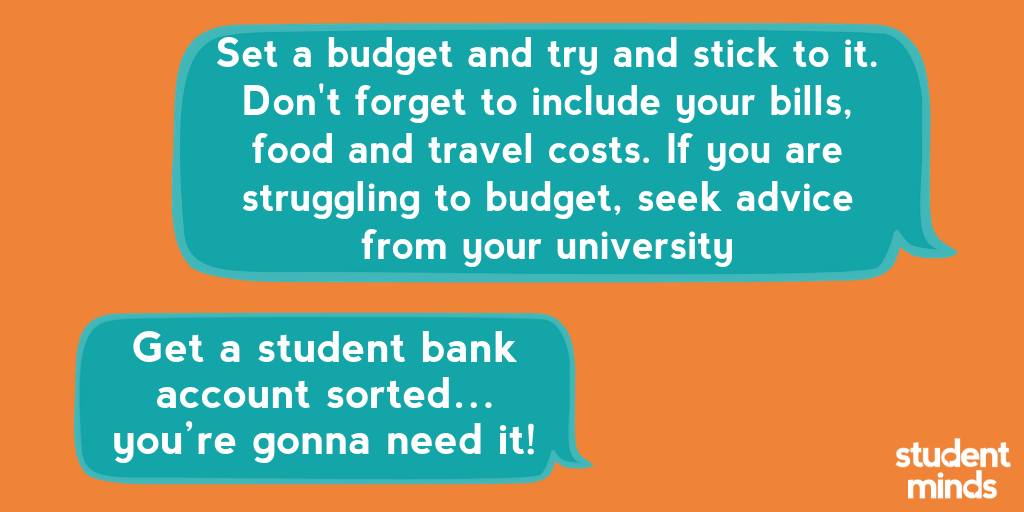
One of the biggest changes for many students is suddenly being in complete control of their money. No longer will you only have pocket money your parents give you every month, but actual huge amounts of money in your bank account. This can be overwhelming at first so it’s important to give this a bit of thought so that you don’t find your account is running low before the end of the year. Check out our tips here.


Look after yourself

It can be easy to forget the most basic tasks when you start trying to prioritise lots of things - this is your reminder that looking after yourself is super important! Get a candle, or a room smell, make time for yourself to just relax. When even washing becomes a hurdle and you put on old clothes as you´ve gotten lazy and sloppy, stop, and take care of yourself.


Getting involved in university activities and meeting new people can be a great way to make your day more fun.


Don’t be afraid to ask for help

Let’s face it, most of us don’t know everything before we’ve had time to experience it and make a few mistakes. Don’t be ashamed to ask a flatmate or support services for advice if you’re struggling with getting to grips with living alone. Check our support page for more info about where to go for help.

Don’t let the #FresherPressure of living independently get to you, follow the above advice or let us know your own tips on Twitter using #FresherPressure.

Saturday, 21 September 2019

#FresherPressure: Starting university with an existing mental health difficulty

We took to social media to see how students manage starting university with a pre-existing mental health difficulty.

Starting university is a scary experience for anyone; if you add mental health difficulties into the mix, the whole process can feel quite daunting. To be able to give you advice that has genuinely helped other people cope with this potentially challenging combination, we asked students for their tips on how they managed...

Prepare before you go

There’s a lot you can actually do to help yourself before you even get to university for the first time,  from gathering information to letting people know what you’ve been through. 

‘Definitely contact your university and get in touch with their support services. Perhaps a support plan can be put in place for you before you even arrive’ - Eli and ‘Have a printed sheet with emergency numbers so they’re easy to access’ - Suzanne

Have a look at what support is available on your campus and don’t forget to register for a local GP, you might be eligible for extra support - it is best to do this as soon as possible.

‘Look into DSA, you’re not alone’ - Grace and ‘Take advice and decide whether you are going to register with a GP local to uni or travel to your home GP. You can use any GP or walk-in centre if you need GP care in an emergency’ - Kate

Inform people

Once you arrive at university, it can be difficult to tell people about the challenges you’ve faced but if you can find a few people to trust, it can make your experience starting university a lot easier. As well as informing more formal services, having friends who are aware will help you to feel more supported.

‘It’s so hard to tell tutors but it’ll help them to understand why you might act a certain way’ - Lily and ‘Tell a flatmate, they don’t need your life story but having someone aware can help’ - Hayley

Know your worth

Although stigma around mental health difficulties has greatly reduced with the increase in awareness and openness in society, it can still be hard to feel confident in who you are when you are also facing these struggles. Remind yourself that your experiences are valid and you are just as rightfully at university as everyone else.

‘Nobody has the right to ever make you feel less due to mental ill health. You should feel so proud of the unique journey you are about to embark on at university’ - Michelle and ‘Never allow anyone at university put you down for difficulties you experience or make you feel that you are less capable, there is no shame in accessing support’

If you feel confident enough to proactively reach out for help, it can make your time at university a lot easier and more enjoyable. Make use of the services available to you - from practical allowances to being able to talk to someone face-to-face.

‘There's no shame if you need to delay exams/get extensions for mental health reasons - you'd be surprised how many others do’ - Steph and ‘It's such a relief having someone to offload to regularly, provide support and work towards goals with’ - Beth

Accept the possibility of challenges

It’s completely normal to find the transition to university difficult, no matter whether you have faced mental health difficulties before or not. Keep it in perspective; some of the things you’re struggling with may be very common amongst all your peers, such as adjusting to living independently and a harder academic level, but be aware when these challenges become prolonged and start to impact negatively on other areas of your life.

‘Remember it's okay to find things difficult - Rose and ‘Ask for help from other students’ - Paula and ‘All transitions can be a challenge’ - Martin

Be kind to yourself

While taking all the above (seemingly huge) steps, it can be all too easy to forget the simple things that can be done to prevent problems from escalating. Remember to dedicate time to looking after yourself in a more general day-to-day way.

‘It can be way too easy to focus on being the best student ever and let self care slide but it is so important to look after yourself’ and ‘If you need to take time out, do’ - Sarah

Hopefully this has eased your #FresherPressure surrounding starting university with a mental health difficulty, look at the support section of our website for more resources. 


Alys has produced content as the Communications Intern at Student Minds, passionate to share student voices in creative and engaging ways. She is going into her second year studying Sociology and sporadically writes about mental health over at www.alysjournals.com.

Friday, 20 September 2019

#FresherPressure: Alcohol and Making Friends

Hannah writes about the social pressure to drink alcohol during Freshers week, and the importance of moderation.  
- Hannah Barham

Going away to University for me meant moving from a village to a city. I went from living in a village with my parents and siblings with a few family-friendly pubs and one bar to living in The City, London, with eight other flatmates and more bars and nightclubs than one could count. Sure, I had had a couple of drinks here and there at social gatherings but never enough to get more than tipsy. My mum had experienced first-hand the effect that alcoholism could have on a family, so alcohol never played a huge part during my teenage years.

This meant that University was the first time that I properly experienced the effects that alcohol can have, from social embarrassment to the worst hangover that I have ever experienced. My experience of Fresher’s week felt like a constant cycle where I was either hungover or drunk, dancing at a different nightclub every night. Whilst there was never any physical or verbal pressure, it felt like there still was an expectation to get drunk every night and attend the Fresher-specific event that was being hosted that evening. Since everyone attended these events, it felt like the best way to get to know your flatmates and other students. Even after Fresher’s week was over, there were still events held every Wednesday evening and weekend that people expected you to attend.

Looking back, there were several moments that I should have realised were signs that the pressure was getting too much for me, but admitting that felt like admitting that I could not handle University and living away from my parents. It felt like everyone else around me could perfectly balance their University work and social life. I felt that by stopping drinking and not going to nightclubs every weekend, I would lose my newfound friends.

At this time, my mental health was the worst it had ever been. I have always been high functioning alongside my anxiety and depression which meant that I was still able to attend lectures and go food shopping as necessary, but I found myself staying in my bed, sleeping more and more often. Drinking alcohol seemed like the only way to alleviate the symptoms of my mental illness, but, in many ways, actually exacerbated them. These moments certainly did not feel like those of the best years of my life.

It took time away from the University environment, where alcohol was not so readily available and there was no pressure to attend events every weekend, for me to realise that the environment that I had put myself into at University was not the best environment for me. Whilst it felt that way whilst staying in student halls, the University experience was not all about getting drunk every weekend. This is the type of University experience that works for some people but not for me; I wanted an experience that did not solely revolve around alcohol and nightclubs and it was only in my second and third years of University that I felt like I found people of a similar mindset to me.

Fresher’s week is not for everyone and that is okay. I am sure that there were events being held by the University during Fresher’s week that did not revolve around alcohol and I wish I would have attended some of these instead of spending my days hungover in bed. I am someone who is hugely influenced by those around me and perhaps by meeting people of a similar mindset earlier, I would not have felt such pressure to consume large volumes of alcohol on a regular basis and experience both anxiety and depression as strongly as I did. I am not saying that consuming alcohol is always a bad thing, but for me, alcohol intensified my mental health symptoms and I am happier consuming it in smaller volumes, if at all.

For more information and advice on starting university here.


My name is Hannah and I graduated from University in 2018. I have my own blog: justhannahhere.blog where I blog about mental health, travel and my life.

Wednesday, 18 September 2019

#FresherPressure: Supporting yourself and others

We took to social media to see how students best support themselves and others on their journey through university.


Supporting yourself

Going to university is a big transition for everyone; it is an experience that doesn’t compare to anything else. It is normal for the change to unsettle you. You can’t necessarily stop these uncomfortable feelings but being aware of them, and preparing ways to manage these emotions when they do pop up, can help to prevent small discomforts from escalating.

‘Be prepared that you might find some things hard - map out the challenges you’re expecting to face and how you can support yourself through these’

If you have this knowledge in place before you go, you won’t have to figure these things out at the point when you need them. Look into what resources your university has to help students and how to access these if you need them.

‘Make use of your personal tutor, university support services and peer support groups. Self care is important’

If you feel like things are starting to go downhill, remember that support does exist: whether that’s talking to friends and family or accessing student support services at your university.

‘I needed someone to just be there, a sounding board’ and ‘There is absolutely no shame in accessing support’

Working on your self-awareness by regularly checking in with yourself may give you the confidence you need to be able to know that you need to reach out.
'Stand up for yourself to get help when you need' - Russell


If you need urgent help, Samaritans are there 24/7 to listen to you and you can find out more about the different support available at university here.

Supporting others

‘Being a consistent friend is an unbelievably helpful thing’ - Adam

Look out for signs that someone is struggling and let them know that you’re there to chat. Don’t pressure people to talk if they’re not ready, give them time and space to talk in their own time.

'Be aware that people may not feel able to talk about how they're feeling at that moment. It sounds a bit cliché, but just let them know you'll be there to listen when they're ready' - Jack


You can show others that it is okay and normal to talk about what you’re struggling with - they shouldn’t feel ashamed or isolated and setting that example can help others open up.

‘If you can, model talking openly about anxieties’ - Andi
Our Look After Your Mate guide touches on many topics surrounding maintaining supportive  friendships at university, from starting difficult conversations and tips for freshers, to understanding your friend’s diagnosis.


Make sure you’re in a good place to offer support, just like they say on aeroplanes: put your own airmask on first before helping others. Find out our tips on looking after yourself whilst supporting someone else here. 

‘Check up on people, ask them if they’re okay - but also don’t sacrifice your own mental health’ - Vanshika and ‘There’s a limit to what friends can do to help and compromising their own needs does not help anyone’

If you do feel able to help, and want to be part of a wider support network at your university, why not find opportunities to get involved with mental health activities on campus? From campaigning to volunteering to run a peer-support group, many universities have options available for students to get involved in.


Look out for yourself and each other to reduce the #FresherPressure of going to university! 

For more information, see Student Minds' tips on starting university, and read more about student’s experiences here.


Alys has produced content as the Communications Intern at Student Minds, passionate to share student voices in creative and engaging ways. She is going into her second year studying Sociology and sporadically writes about mental health over at www.alysjournals.com.